

One of the most modern and long-lasting types of roofing is a standing seam metal roof. This type of roof is popular with builders and homeowners because it looks good, lasts a long time, and can withstand bad weather. If you want to put a standing seam metal roof on your home or structure, you need to know a lot about how it works.
Vertical metal panels with raised seams join the panels together in standing seam metal roofing. These seams stick up above the roof surface, which helps keep water from getting through and makes the roof last longer. The way this roofing system is put together has a big effect on how well it works, how it looks, and how long it lasts.
In this article, we’ll go over all the crucial aspects about standing seam metal roofs, such as their parts, how to install them, the best materials to use, the benefits of using them, and how to keep them in good shape.
What Does a Standing Seam Metal Roof Look Like?
A standing seam metal roof is a type of roof that has metal panels that extend vertically from the roof’s ridge to the eaves. The most important part of this roofing design is the elevated seam that connects two panels.
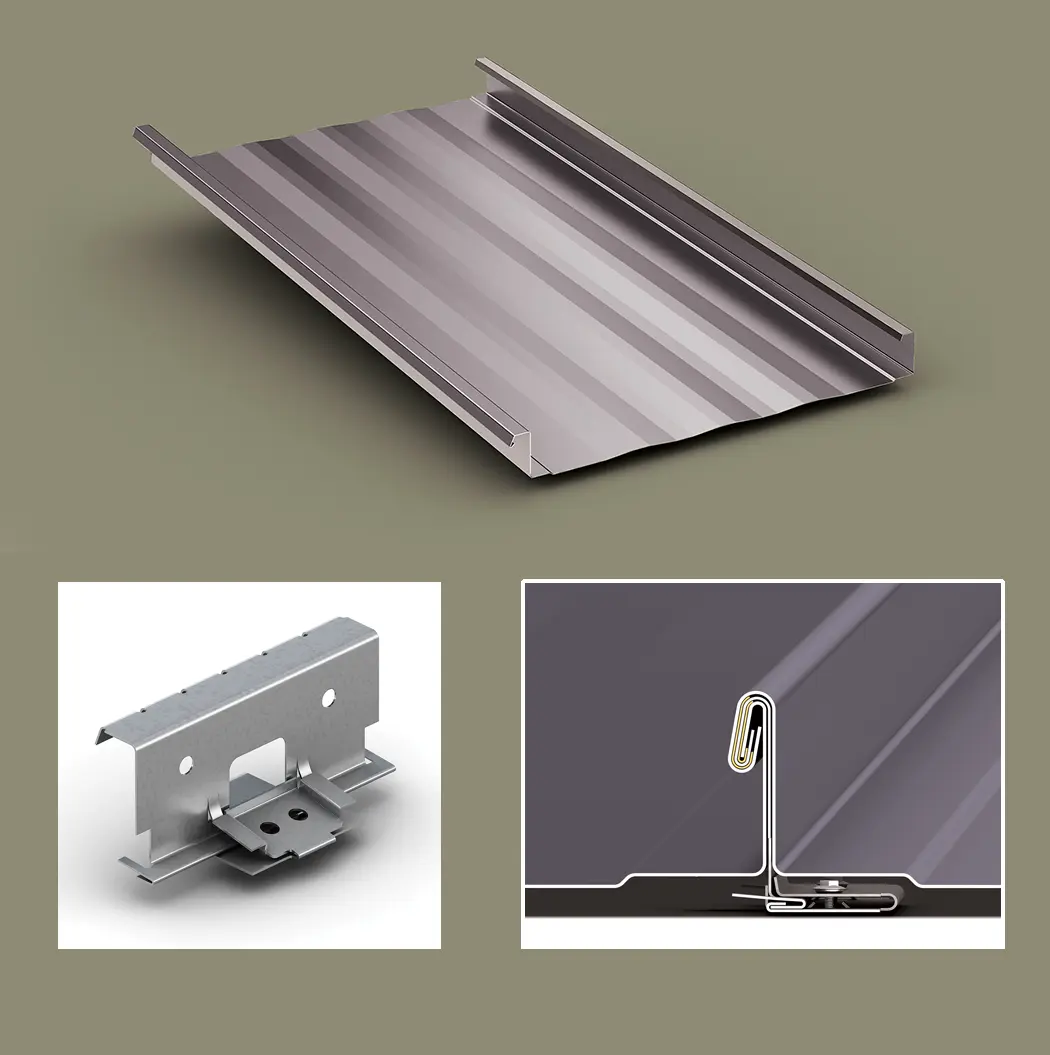
The seams that are raised are usually between one and two inches high and fit together with special clips or mechanical seams. The seams hide the fasteners, so the roof stays smooth and safe from water damage.
The panel design, seam type, fasteners, clips, flashing, and trim parts are the most significant parts of a standing seam metal roof. All of these pieces work together to make a roof that is robust and can stand up to the weather.
People often utilize standing seam metal roofs on homes, businesses, and modern buildings because they appear sleek and modern.
The Main Parts of Standing Seam Metal Roof Details
When learning about standing seam metal roof details, it’s important to know what each part does. Each section has a specific job to do to make sure the roof works well in all kinds of weather.
1. Metal Panels
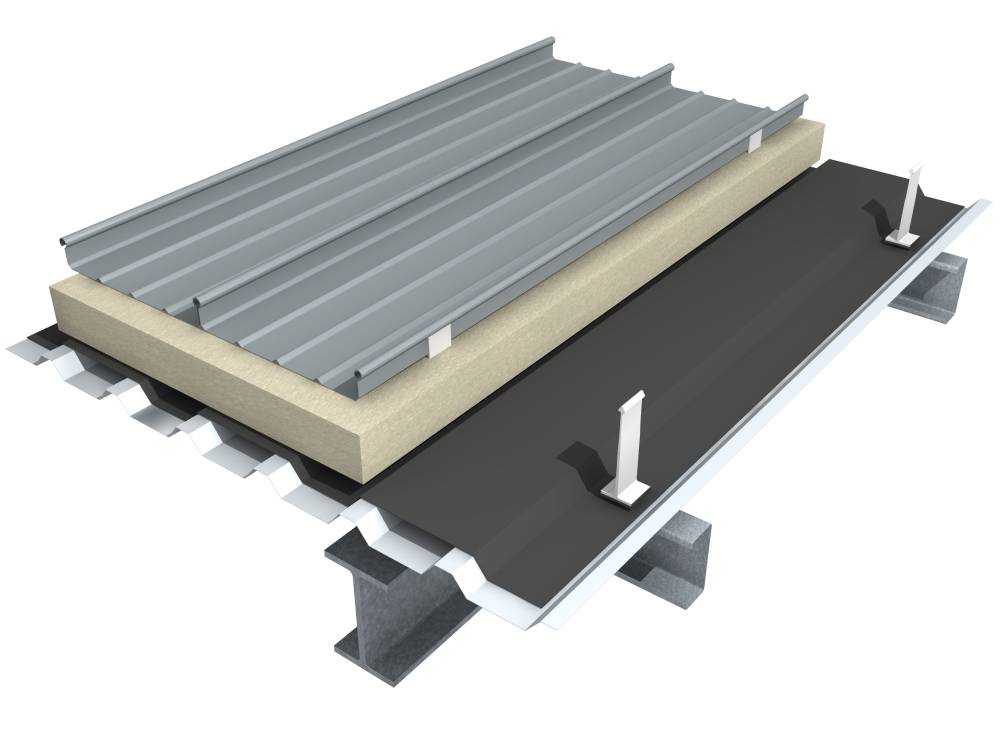
The roof’s main surface is made of metal panels. The visible part of the roofing system is these panels, which run vertically along the roof.
Some common features of panels include:
-
Vertical design
-
Interlocking seams
-
Hidden fasteners
-
Long continuous sheets
Most of the time, these panels are manufactured in long lengths to reduce the number of joints and improve water resistance.
2. Raised Seams
The most important feature of standing seam metal roof systems is the raised seams. These seams join adjacent panels and hide the fasteners.
Benefits of raised seams include:
-
Preventing water penetration
-
Improving structural strength
-
Creating a modern architectural appearance
-
Allowing panels to expand and contract
3. Hidden Fasteners
Standing seam systems do not use visible fasteners like traditional metal roofs. Instead, fasteners are placed beneath the panels or inside the seams.
This design helps prevent:
-
Water leaks
-
Rust around screws
-
Damage from weather exposure
Hidden fasteners are one of the key features that improve the durability of a standing seam metal roof.
4. Clips and Brackets
Clips hold the metal panels to the roof deck while allowing slight movement during temperature changes.
Since metal expands in heat and contracts in cold temperatures, the clip system allows the panels to shift without damaging the roof structure.
5. Flashing and Trim
Flashing protects roof joints, edges, valleys, and openings such as chimneys or vents.
Important flashing areas include:
-
Ridge flashing
-
Valley flashing
-
Eave flashing
-
Gable trim
These flashing components are essential for preventing water intrusion.
Different Types of Seams for Standing Seam Metal Roofs
Standing seam metal roof systems use different seam styles depending on installation requirements and architectural design.
Snap-Lock Seam
Snap-lock seams are one of the most common options. Panels snap together without mechanical crimping.
Key features include:
-
Faster installation
-
Clean appearance
-
Ideal for residential roofing
Mechanical Lock Seam
Mechanical lock seams require specialized tools to fold and lock the seams.
Features include:
-
Extremely strong connection
-
Excellent weather protection
-
Often used in commercial buildings
Batten Panel Seam
Batten seam roofs use a cap placed over panel joints.
Key characteristics include:
-
Traditional architectural style
-
Decorative appearance
-
Common in custom roof designs
Each seam type offers different advantages depending on the project.
Materials Used in Standing Seam Metal Roof Systems
Another important detail of standing seam roofing systems is the type of metal used for the panels.
Different materials provide different levels of durability, cost, and visual appeal.
Common Roofing Materials
| Material | Durability | Cost Level | Appearance |
|---|---|---|---|
| Steel | Very strong | Moderate | Modern |
| Aluminum | Corrosion-resistant | Moderate | Lightweight |
| Copper | Extremely durable | Very expensive | Premium look |
| Zinc | Long-lasting | High | Elegant finish |
Steel is the most common material because it offers a strong balance between durability and affordability.
How to Install a Standing Seam Metal Roof
The installation process is another important part of standing seam metal roof systems. Proper installation ensures the roof lasts for decades.
Step 1: Prepare the Roof Deck
Contractors inspect and prepare the roof deck before installing the panels.
Preparation may include:
-
Removing old roofing materials
-
Repairing damaged decking
-
Installing waterproof underlayment
Step 2: Install the Underlayment
Underlayment adds an extra layer of moisture protection beneath the metal panels.
Common types of underlayment include:
-
Synthetic roofing underlayment
-
Self-adhering waterproof membrane
This layer protects the roof deck if water ever penetrates the panels.
Step 3: Install the Panels
Metal panels are installed vertically from the roof edge toward the ridge.
Each panel is secured with hidden clips and fasteners.
Step 4: Lock the Panels Together
Some systems snap seams together, while others use mechanical seaming tools.
This step creates the waterproof seal that is central to standing seam roofing.
Step 5: Install Flashing and Trim
The final step includes installing ridge caps, valleys, and edge trim to complete the roof system.
Benefits of a Standing Seam Metal Roof
Many homeowners choose this roofing system because of its numerous advantages.
1. Long Lifespan
Standing seam metal roofs can last 40 to 70 years with proper maintenance.
2. Superior Weather Protection
Raised seams prevent water penetration and improve storm resistance.
3. Energy Efficiency
Metal roofs reflect sunlight, helping homes stay cooler and reducing cooling costs.
4. Modern Appearance
The vertical panel design creates a sleek and contemporary architectural style.
5. Low Maintenance
Hidden fasteners and durable materials reduce maintenance requirements.
Design Considerations for Standing Seam Metal Roofs
When planning a standing seam metal roof, several design factors must be considered.
Roof Slope
Standing seam roofs perform best on slopes of 3:12 or greater.
Low slopes may require mechanical seam systems.
Panel Length
Longer panels reduce the number of seams and improve water resistance.
Thermal Movement
Since metal expands and contracts with temperature changes, clip systems must allow for movement.
Ventilation
Proper attic ventilation helps prevent moisture buildup beneath the roof.
Maintenance Tips for Standing Seam Metal Roofs
Although standing seam metal roofs are durable, regular maintenance helps extend their lifespan.
Recommended Maintenance Steps
-
Inspect the roof annually
-
Remove leaves and debris
-
Check seams and flashing
-
Clean gutters regularly
-
Look for scratches or coating damage
Routine inspections help identify small problems before they become major repairs.
Common Problems with Standing Seam Metal Roofs
Problems are rare but can occur if installation is done incorrectly.
Possible Issues
-
Poorly sealed seams
-
Incorrect flashing installation
-
Thermal expansion damage
-
Panel misalignment
Hiring experienced contractors helps prevent these problems.
Cost of a Standing Seam Metal Roof
The cost of installing a standing seam metal roof depends on several factors.
Factors Affecting Cost
-
Type of metal used
-
Roof size and slope
-
Installation complexity
-
Labor costs
-
Custom trim and flashing
Standing seam metal roofs are generally more expensive than asphalt shingles, but they provide longer lifespan and superior durability.
Many homeowners consider them a smart long-term investment.
Why Standing Seam Metal Roofs Are Popular Today
Metal roofing has become popular in modern architecture due to its durability and clean appearance.
Standing seam metal roofs are:
-
Highly water-resistant
-
Structurally strong
-
Energy efficient
Architects frequently choose them for modern homes, commercial buildings, cabins, and eco-friendly construction projects.
They are also compatible with solar panels and advanced insulation systems, making them ideal for sustainable building designs.
Conclusion
Understanding the details of standing seam metal roofs is essential when planning a modern and long-lasting roofing system. With durable materials, hidden fasteners, and raised seams, this roofing type is one of the most reliable options available today.
From metal panels and seam types to flashing systems and installation methods, every detail contributes to the roof’s performance.
When installed properly, a standing seam metal roof can protect a home for decades while providing energy efficiency, modern design, and minimal maintenance.
Read more:-Standing Seam Metal Roof Panels: Benefits, Types, Installation Guide